
Author name: admin

Uncategorized

Khauf Review | A Harrowing Tale Of Survival In A World Shaped By Male Violence – Copy

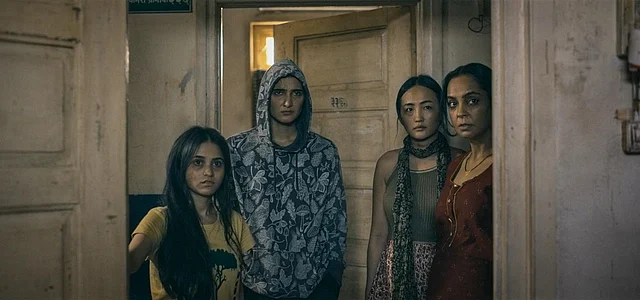
Khauf Review | A Harrowing Tale Of Survival In A World Shaped By Male Violence Created by Smita Singh and directed by Pankaj Kumar and Surya Balakrishnan, Khauf (2025) is very clear about its antagonist from the very first frame. It isn’t a ghost or some sinister energy lurking in the corridors somewhere—that comes later. It’s the grim persistence of predatory men to turn even the most mundane moments of your life into their personal peep show, all while you’re simply trying to exist. In Khauf, Delhi is more than a setting. It’s a threat. The series, currently streaming on Amazon Prime, begins with Anu (Asheema Vardaan) in a DTC bus bathed in the sickly flicker of tired fluorescent lights, surrounded by men. The ghost of Nirbhaya and the horror of her fate hovers over this moment and lingers throughout its run. She has to navigate the unsafe gullies of Delhi, where an unknown man harasses her from the shadows with laser pointers—violating her body from a distance even when he cannot touch her, before she can return to the relative safety of her hostel room. The decrepit hostel, the men who guard its gates and are in charge of its resident’s welfare and nourishment are all just as hazardous as the outside threats. But it is the community of women inside that provides the safety net. Khauf Still Photo: IMDB Anu has plans to shift out of the hostel with her friend Svetlana (Chum Darang), something that upsets her other hostel mates Nikki (Rashmi Zurail Mann), Rima (Priyanka Setia), and Komal (Riya Shukla). But her bid for freedom is cut short as the series jumps forward six months and stations on Madhu (Monika Panwar) and her own desperate yearning to do the same. Where Anu saw freedom beyond the walls of room 333 (written in the Hindi numeric ३३३, which flipped is ६६६, 666, the devil’s number), Madhu stakes her hopes within them. Over the course of eight episodes, with roughly six hours of runtime, Khauf introduces three other storylines, all of which collapse into each other towards the end. There’s the strict but caring warden Gracie Dungdung (played by an assured Shalini Vatsa) and her best friend and drinking partner Constable Ilu Mishra (Geetanjali Kulkarni), who is worried about her son troubled Jeeva’s (Satyam Sharma) disappearance. There’s Madhu’s employer and local guardian, Dr. Shohini Verma (Shilpa Shukla), a psychiatrist who tries to unravel the mystery of a possible shared psychosis that has kept Nikki, Rima and Komal confined to the premises of the hostel. Then there’s Rajat Kapoor’s eerie Hakim, another predator pretending to be a saviour. Read more at: https://www.outlookindia.com/art-entertainment/khauf-review-a-harrowing-tale-of-survival-in-a-world-shaped-by-male-violence

Uncategorized

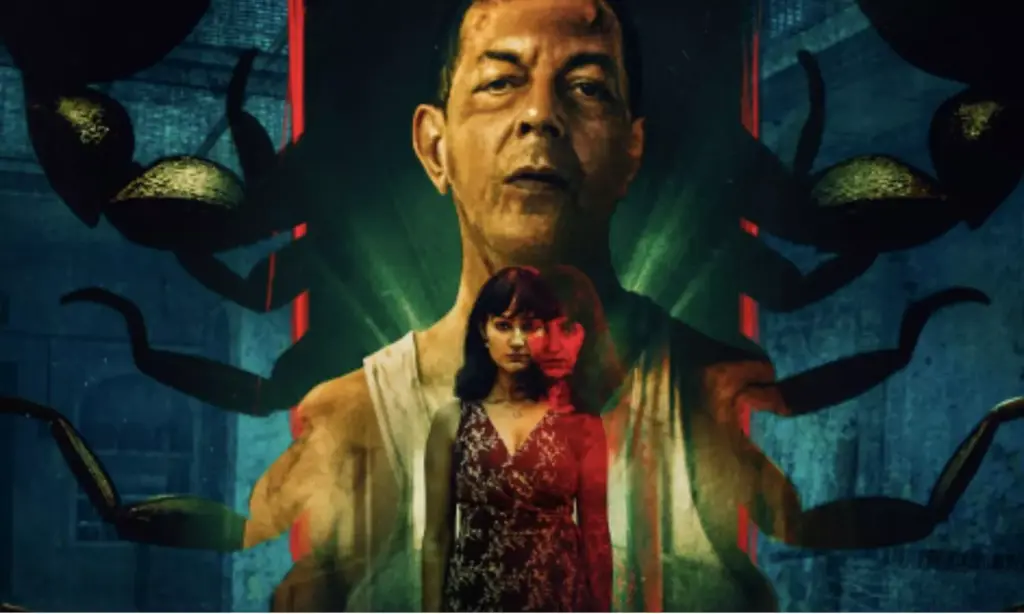
Khauf looks at male aggression and the psyche of trauma through horror

Khauf Review | A Harrowing Tale Of Survival In A World Shaped By Male Violence Created by Smita Singh and directed by Pankaj Kumar and Surya Balakrishnan, Khauf (2025) is very clear about its antagonist from the very first frame. It isn’t a ghost or some sinister energy lurking in the corridors somewhere—that comes later. It’s the grim persistence of predatory men to turn even the most mundane moments of your life into their personal peep show, all while you’re simply trying to exist. In Khauf, Delhi is more than a setting. It’s a threat. The series, currently streaming on Amazon Prime, begins with Anu (Asheema Vardaan) in a DTC bus bathed in the sickly flicker of tired fluorescent lights, surrounded by men. The ghost of Nirbhaya and the horror of her fate hovers over this moment and lingers throughout its run. She has to navigate the unsafe gullies of Delhi, where an unknown man harasses her from the shadows with laser pointers—violating her body from a distance even when he cannot touch her, before she can return to the relative safety of her hostel room. The decrepit hostel, the men who guard its gates and are in charge of its resident’s welfare and nourishment are all just as hazardous as the outside threats. But it is the community of women inside that provides the safety net. Khauf Still Photo: IMDB Anu has plans to shift out of the hostel with her friend Svetlana (Chum Darang), something that upsets her other hostel mates Nikki (Rashmi Zurail Mann), Rima (Priyanka Setia), and Komal (Riya Shukla). But her bid for freedom is cut short as the series jumps forward six months and stations on Madhu (Monika Panwar) and her own desperate yearning to do the same. Where Anu saw freedom beyond the walls of room 333 (written in the Hindi numeric ३३३, which flipped is ६६६, 666, the devil’s number), Madhu stakes her hopes within them. Over the course of eight episodes, with roughly six hours of runtime, Khauf introduces three other storylines, all of which collapse into each other towards the end. There’s the strict but caring warden Gracie Dungdung (played by an assured Shalini Vatsa) and her best friend and drinking partner Constable Ilu Mishra (Geetanjali Kulkarni), who is worried about her son troubled Jeeva’s (Satyam Sharma) disappearance. There’s Madhu’s employer and local guardian, Dr. Shohini Verma (Shilpa Shukla), a psychiatrist who tries to unravel the mystery of a possible shared psychosis that has kept Nikki, Rima and Komal confined to the premises of the hostel. Then there’s Rajat Kapoor’s eerie Hakim, another predator pretending to be a saviour. Read more at: https://www.outlookindia.com/art-entertainment/khauf-review-a-harrowing-tale-of-survival-in-a-world-shaped-by-male-violence
Uncategorized

Misogyny as the Monster in Khauf

Misogyny as the Monster in Khauf This tale of horror is woven with the traumatic reality of being a woman in India Every once in a while, desi OTT will throw up something for those who hope for more than the tedious, safe and formulaic tripe that hogs our screens. Prime Video’s newly released eight-episode series, Khauf is just that. Set in 2017, Delhi, Khauf follows the life of Madhu (Monika Panwar in excellent form) who leaves her hometown Gwalior and comes to the city, ostensibly looking to be closer to her boyfriend, Arun (Abhishek Chauhan). Thanks to friends, she lands a day job and even picks up a side gig working reception for a psychiatrist, Shohini (Shilpa Shukla). As for accommodation, she picks an isolated working women’s hostel in the middle of a forested area, setting the scene for some thrills, chills and spills. It’s a different thing that the thrills, chills and spills never seem to come as you’d expect them to. Khauf doesn’t rely on jump scares, nor does it play with sound or visual blood and gore. Writer-creator Smita Singh and directors Pankaj Kumar and Surya Balakrishnan take time to build this world slowly and deliberately. Nitin Zihani Choudhary’s production design is impeccable, with carefully curated spaces that augment the reality of living in an unsafe world dominated by men. Information is doled out in small bits like pieces of a jigsaw puzzle; one where you can guess midway what the final picture will look like. There’s no new ground broken here for fans of classic horror or supernatural fiction, so the purely horror sequences of the series can feel average. This is not to take away from the fact that the creators have excelled in inspiring an otherworldly sense of pervasive dread. The kind that gets under your skin and doesn’t leave for days. This, along with some powerful performances by the ever-dependable actors Rajat Kapoor and Geetanjali Kulkarni, along with Shalini Vatsa, are what make the show. Actors Riya Shukla, Rashmi Mann, Chum Darang and Priyanka Setia in a still from the series. Inner Worlds of Horror Spoilers Ahead. In the hostel, Madhu is given the only vacant room—333. With a single bed and solitary Shah Rukh Khan poster adorning its peeling walls, this could be a room in any ladies’ hostel, in any Indian city. Only this one has been under lock and key since the death of its previous resident, Anu (Ashima Vardaan). Even months later, the other four residents of the floor—Nikki (Rashmi Zurail Mann), Komal (Riya Shukla), Lana (Chum Darang) and Rima (Priyanka Setia)—are so traumatised by the tragedy that they haven’t been able to leave the hostel grounds. Gradually, the ‘entity’ living in Madhu’s room begins to make its presence felt, mirroring the unravelling of Madhu’s own traumatic backstory that pushed her to leave her hometown in the first place. As the two threads converge, it becomes increasingly difficult to tell what’s real and what only lives in Madhu’s head. Actor Rajat Kapoor as the hakim. One thing is amply clear though. The unknown entity that haunts the hostel could never be as scary as the men that haunt Madhu in this story, be it a stranger who rubs up against her in a bus, leaving semen on her shirt; or the one who shines a laser at her in a dark alley. Her boyfriend is the very definition of an orange flag, as he switches back and forth between being an understanding partner to small acts of everyday misogyny. Even the introduction of what seems to be a male ally in the form of Nakul (Gagan Arora) comes laden with uncertainty, as she suspects him of a past crime against her. Every male character in Khauf is a red flag, be it key characters like the hakim (Rajat Kapoor) whose practice hides his murderous tendencies, or the tertiary ones like the creepy hostel watchman. It’s the men of Khauf that make the show ominous, not its ghouls. Khauf doesn’t rely on jump scares, nor does it play with sound or visual blood and gore. Achieving this level of creepiness is an art form that some filmmakers in Hollywood have perfected, particularly with films like The Purge (2013), Get Out (2017) and Midsommar (2019). Instead of mining our fear of the unknown, these films have adapted the fears that bubble beneath society’s surface to frighten and provoke. These are possibly among the most effective horror films of our period because they tap into humanity’s darkest impulses and put them on screen, playing on themes of privilege and class, exploring power dynamics that allow any one set of humans to exploit another. Smita Singh, the writer and creator of the series has spoken in interviews about drawing from her own personal experiences of living in a ladies’ hostel in the Capital around the time of the horrific 2012 Delhi gang rape and murder. She takes India’s deeply-flawed social structure and paints a narrative that runs parallel to her supernatural saga—one that shines light on the horrors faced by women in India every single day. No man can comprehend what it’s like to live in a society where women are looked upon as objects or fathom what that that feels like. It’s this innate fear that Singh chooses to mount her story upon, and it hits so hard that the classic horror tropes on the show pale in comparison to the real day-to-day horror of being a woman living in this country. Read more at: https://www.thevoiceoffashion.com/intersections/features/misogyny-as-the-monster-in-khauf–6285?fbclid=PAZXh0bgNhZW0CMTEAAafPrCgCNb1kYhJXjEfRjwG7ZqkdVHMuPdTpDtJkkKNt7Wzdp_NAaFi1r-1ovg_aem_oy9_EGvjhM2b7jOeo4FK0A

Uncategorized

Khauf Review | A Harrowing Tale Of Survival In A World Shaped By Male Violence

Khauf Review | A Harrowing Tale Of Survival In A World Shaped By Male Violence Created by Smita Singh and directed by Pankaj Kumar and Surya Balakrishnan, Khauf (2025) is very clear about its antagonist from the very first frame. It isn’t a ghost or some sinister energy lurking in the corridors somewhere—that comes later. It’s the grim persistence of predatory men to turn even the most mundane moments of your life into their personal peep show, all while you’re simply trying to exist. In Khauf, Delhi is more than a setting. It’s a threat. The series, currently streaming on Amazon Prime, begins with Anu (Asheema Vardaan) in a DTC bus bathed in the sickly flicker of tired fluorescent lights, surrounded by men. The ghost of Nirbhaya and the horror of her fate hovers over this moment and lingers throughout its run. She has to navigate the unsafe gullies of Delhi, where an unknown man harasses her from the shadows with laser pointers—violating her body from a distance even when he cannot touch her, before she can return to the relative safety of her hostel room. The decrepit hostel, the men who guard its gates and are in charge of its resident’s welfare and nourishment are all just as hazardous as the outside threats. But it is the community of women inside that provides the safety net. Khauf Still Photo: IMDB Anu has plans to shift out of the hostel with her friend Svetlana (Chum Darang), something that upsets her other hostel mates Nikki (Rashmi Zurail Mann), Rima (Priyanka Setia), and Komal (Riya Shukla). But her bid for freedom is cut short as the series jumps forward six months and stations on Madhu (Monika Panwar) and her own desperate yearning to do the same. Where Anu saw freedom beyond the walls of room 333 (written in the Hindi numeric ३३३, which flipped is ६६६, 666, the devil’s number), Madhu stakes her hopes within them. Over the course of eight episodes, with roughly six hours of runtime, Khauf introduces three other storylines, all of which collapse into each other towards the end. There’s the strict but caring warden Gracie Dungdung (played by an assured Shalini Vatsa) and her best friend and drinking partner Constable Ilu Mishra (Geetanjali Kulkarni), who is worried about her son troubled Jeeva’s (Satyam Sharma) disappearance. There’s Madhu’s employer and local guardian, Dr. Shohini Verma (Shilpa Shukla), a psychiatrist who tries to unravel the mystery of a possible shared psychosis that has kept Nikki, Rima and Komal confined to the premises of the hostel. Then there’s Rajat Kapoor’s eerie Hakim, another predator pretending to be a saviour. Read more at: https://www.outlookindia.com/art-entertainment/khauf-review-a-harrowing-tale-of-survival-in-a-world-shaped-by-male-violence

Scroll to Top

Get in touch!
for your Branded content PRODUCTION